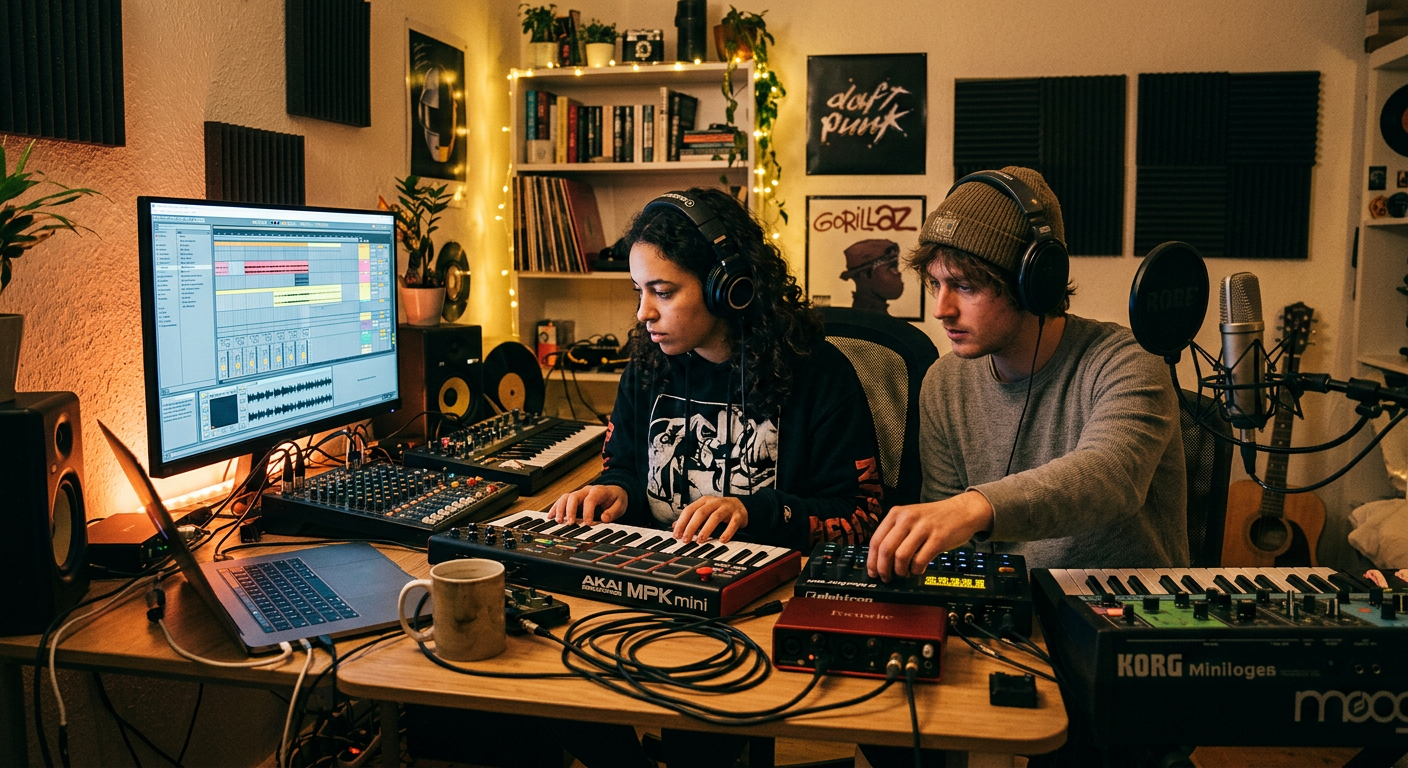
For years, the story of the independent musician has sounded familiar: record at home, upload everywhere, hustle endlessly on social media, and hope the algorithm smiles in your direction. It’s a romantic myth that has fueled countless careers—and burned out just as many.
Now, AI music company Suno is betting that the next chapter of independent music won’t just be about creating songs. It’ll be about creating opportunity.
This week, Suno unveiled Spark, a new incubator program designed specifically for unsigned independent artists. Rather than simply offering another AI tool, the company is promising something more tangible: creative grants, marketing support, mentorship, collaborative writing camps, and direct access to the people building the platform itself. Artists selected for the program will also retain creative control and commercial rights to their music, a significant point in an era when ownership has become one of the music industry’s hottest debates.
More Than Software
The launch of Spark arrives during one of the most turbulent periods in modern music history.
Artificial intelligence has become both hero and villain depending on who’s holding the microphone. Some artists see AI as the next synthesizer—a revolutionary instrument. Others fear it represents automation replacing human expression.
Suno appears determined to position itself somewhere in the middle.
Instead of asking artists to compete with machines, Spark suggests the platform wants musicians to collaborate with technology while investing directly in human creators. The company says the program is aimed at singers, songwriters, and producers releasing music independently under their own names, providing funding alongside professional development.
That distinction matters.
For months, critics have argued AI companies have spent billions building software while relatively little has been invested back into the creative communities supplying the inspiration. Spark is Suno’s attempt to answer that criticism with resources rather than rhetoric.
The Culture Is Already Changing
The timing couldn’t be more interesting.
Across festivals, coffee shops, Discord servers, and bedroom studios, independent musicians are redefining what it means to build a career.
At this summer’s electronic music gatherings—including festivals like Tomorrowland—the conversation isn’t simply about analog versus digital anymore. It’s about workflow. Producers are discussing prompt engineering alongside modular synthesizers. Ambient musicians are blending field recordings with AI-assisted arrangements. DJs are testing hybrid performances where machine-generated textures meet live improvisation.
The old boundaries separating “human” and “computer” music are becoming increasingly blurry.
Spark enters that conversation by suggesting that AI’s biggest contribution may not be replacing musicians—but helping more of them finish ambitious projects.
Money Still Matters
Independent musicians rarely fail because they lack ideas.
They run out of money.
Recording costs, promotion, artwork, distribution, mastering, music videos, travel, and advertising add up quickly. Even artists with devoted audiences often find themselves juggling day jobs while trying to release meaningful work.
Spark addresses those realities with grants and marketing assistance instead of simply offering more creative software. The message is clear: great songs deserve audiences, not just hard drives.
Whether the program grows into something comparable to traditional artist development remains to be seen, but it’s a notable shift from technology companies that historically focused almost entirely on building platforms.
Can AI Earn Trust?
Of course, none of this erases the controversy surrounding generative AI music.
Questions about copyright, licensing, training data, and artist compensation remain central to the industry’s future. Those debates are far from over.
Yet Suno has recently emphasized partnerships with established music companies while announcing plans for licensed music models and broader artist collaborations. Spark appears to be another step toward positioning the company as an artist partner rather than simply an AI startup.
Trust, however, isn’t earned through press releases.
It’s earned through the artists who emerge from programs like this.
The Next Indie Revolution?
Every generation of musicians has discovered a tool that changed everything.
The four-track cassette recorder democratized recording.
The laptop democratized production.
Bandcamp democratized distribution.
AI may democratize composition – but only if artists remain at the center of the process.
That’s the promise Spark is making.
Whether history remembers it as a genuine investment in independent music or simply another chapter in the AI revolution will depend less on the technology and more on the musicians who use it.
If even a handful of tomorrow’s groundbreaking artists launch their careers through Spark, the program could become more than an incubator.
It could become one of the defining stories of the next era of independent music.
About The Author