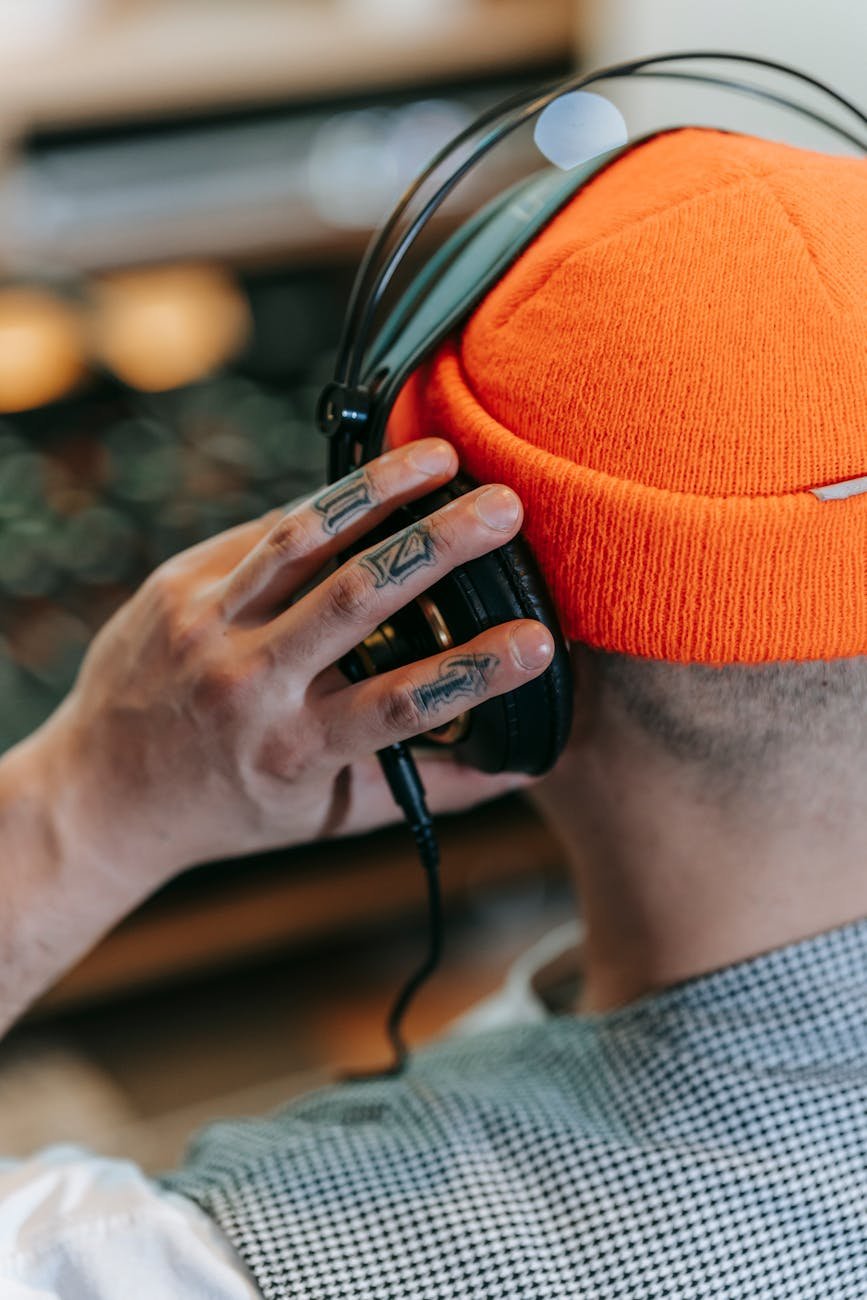
The algorithm promised liberation. Instead, it became the most powerful gatekeeper the music industry has ever known.
There’s a moment in July 2025 when the question of control becomes uncomfortably clear. King Gizzard & The Lizard Wizard, a band with 27 studio albums and over 1.1 million monthly listeners on Spotify, decides to pull their entire discography from the world’s most dominant music platform. Not because of streaming rates, though those are abysmal. Not because their fans can’t find them there, though that’s certainly a problem. They leave because Spotify’s CEO has invested hundreds of millions into AI military drone technology, and the band’s frontman, Stu Mackenzie, arrives at a philosophical breaking point: “Sometimes you just forget that you have free will.”
That phrase should haunt us. Because Mackenzie isn’t just talking about King Gizzard’s choices. He’s talking about ours.
With 675 million monthly active users and a stranglehold on music discovery, Spotify has become something far more significant than a streaming service. It’s the modern equivalent of the radio station, the record store, and the hit-making machine all collapsed into a single algorithm, one that decides, with increasingly precise calculation, what billions of people listen to every day. The company’s playlists account for approximately 30% of all plays on the platform. Its recommendation system touches nearly every interaction a user has with music. And perhaps most importantly, its financial incentives have reshaped how artists create, release, and market their work.
The story of Spotify’s rise isn’t really about convenience or access, though those are the narratives the company has always sold. It’s a story about power consolidation dressed up in the language of democratization, a playbook Silicon Valley has perfected. And in December 2025, as Spotify’s annual Wrapped phenomenon transforms music-listening data into a cultural spectacle watched by hundreds of millions, we’re all beginning to feel the weight of what we’ve traded away.
The Algorithm as Invisible Tastemaker
When Spotify launched its algorithmic recommendation system, it offered what seemed like a profound liberation. No longer would radio DJs, record labels, or music critics be the sole gatekeepers of taste. An intelligent machine would learn what you loved and introduce you to music you never knew existed. It was supposed to be meritocratic: good music would find an audience, regardless of whether it had major label backing or a substantial promotional budget.
The technical sophistication is real. Spotify’s algorithm, powered by something called BaRT (Bandits for Recommendations as Treatments), processes listening data across 675 million accounts, analyzing not just what you stream but how you engage with it. Whether you skip, save, replay, add to personal playlists, or simply let the song play through. The system learns your listening patterns by hour of day, monitors the songs you’ve favorited, tracks the artists you follow, and even analyzes the acoustic qualities of each track: its tempo, danceability, energy level, and emotional valence.
But here’s the thing about algorithms: they don’t discover. They reflect and amplify. As media scholar Jeremy Morris observed in an interview with Axios, “Streaming has become the new record-store shelf.” And like any shelf, someone decides what gets prime visibility and what gets buried in the back.
That someone is Spotify.
What started as algorithmic purity, the machine learning that you like and showing it to you, has evolved into a much more complex power structure. Spotify’s editorial team curates massive playlists like “RapCaviar,” “New Music Friday,” and “Today’s Top Hits,” each with millions of followers. These aren’t algorithmic discoveries. They’re editorial choices, made by humans at Spotify, with particular aesthetic and commercial preferences. And when researchers examined how these playlists rank songs, they found something troubling: songs by major label artists consistently ranked higher than independent releases, even when controlling for quality and listener preference. In one academic study of Spotify’s editorial playlists, researchers found evidence of systematic bias favoring established artists over emerging ones.
The platform then amplifies this editorial power through algorithmic distribution. Songs featured on Spotify’s curated playlists get recommended more frequently, included in algorithmic playlists like “Discover Weekly” more often, and given more prominence on the home screen. Being featured on Spotify’s “Search Page” increases a playlist’s daily follower growth by 0.95%, roughly double the effect of including a major label superstar’s track. This creates a feedback loop: what Spotify chooses to feature algorithmically becomes more popular, which signals to the algorithm that it’s good, which leads to more features, which makes it even more popular.
It’s power, dressed up as mathematics.
The Myth of Discovery
For artists, the shift has been seismic. Before streaming, radio controlled access. Now Spotify does. And unlike radio, which operated within specific geographic markets and dayparts, Spotify’s algorithm operates globally and 24/7. A song can reach 675 million potential listeners through playlist placement, a reach that would have seemed impossible in the radio era.
For emerging artists and independent musicians, Spotify initially looked like the answer to a centuries-old problem: how do you get heard without a major label backing you? For the first time, an artist could distribute globally and potentially build an audience without securing a record deal, radio airplay, or critical attention from traditional media.
But something shifted around 2017. Users familiar with Spotify noticed the algorithm stopped rewarding serendipity. It stopped introducing you to surprising new artists and instead began reflecting versions of music you’d already heard. This isn’t a bug; it’s by design. Spotify’s engagement metrics favor listener retention, not discovery. A user who listens to the same 50 artists repeatedly generates more predictable engagement data and more predictable revenue streams than a user exploring widely across genres and decades of music history.
Meanwhile, the tools available to independent artists have become increasingly costly. The practice of playlist pitching, getting your music heard by the human curators who manage Spotify’s major playlists, has spawned an entire industry of “playlist promotion” services charging anywhere from $40 to hundreds of dollars to pitch to curators. Many of these curators operate outside Spotify’s official channels, creating a shadowy pay-to-play ecosystem that has nothing to do with algorithm optimization and everything to do with old-fashioned payola, repackaged for the streaming age.
One Reddit user with some perspective on the situation captured the absurdity: “When did discovery turn into something you can purchase for $40 from someone with a private Instagram account?” The answer, it turns out, is around 2020 when Spotify’s algorithm became so inscrutable, and major label dominance so complete, that independent artists felt compelled to hire intermediaries just to get their music heard.
The Demonetization of Diversity
But the really consequential power shift isn’t about discovery. It’s about survival. In 2024, Spotify changed its payment system in a move the company described as combating “artificial streaming” and ensuring royalties went to “professional” and “working” musicians. The new policy: any track that generates fewer than 1,000 streams per year receives zero compensation.
On its surface, this sounds reasonable. In practice, it’s a draconian purge of musical diversity.
Roughly 87% of tracks on Spotify now generate no revenue for their creators. This includes not just hobby musicians making bedroom recordings, but working composers, local artists, experimental musicians, and niche genre creators who have genuine audiences but happen to operate outside mainstream consumption patterns. According to one analysis, Spotify withheld approximately $47 million in royalties from small independent artists in 2024 alone, redirecting that money to artists already accumulating the lion’s share of streams.
This policy mechanically favors whatever is already popular. It rewards the algorithm’s existing preferences. And it creates a trap for emerging artists: you can’t reach 1,000 streams per year without visibility, and you can’t get visibility without the algorithm, and the algorithm increasingly favors songs already performing well. It’s a closed loop designed to exclude anyone outside the commercial mainstream.
Thom Yorke of Radiohead presciently warned about this 12 years ago. “Make no mistake,” he wrote in 2013, “new artists you discover on Spotify will not get paid.” He was exactly right. He pulled his solo work from Spotify in protest, a gesture that made headlines but ultimately changed nothing. The system is too powerful, the dependency too complete. Eventually, even Yorke had to put his music back.
The implications ripple through music itself. Artists now craft songs with the algorithm in mind: shorter verse-chorus-verse structures that grab attention in the first 30 seconds, production choices optimized for smartphone speakers, lyrics designed for algorithmic mood classification. Some artists have explicitly designed releases around Spotify’s engagement metrics, crafting playlists of their own songs to boost algorithmic placement, timing releases to coincide with algorithmic cycles, and even adjusting song length to match the platform’s ideal parameters.
This isn’t artistic freedom. This is creative work shaped by the hidden preferences of a Swedish technology company’s recommendation engine.
The Gatekeeping Shift
What’s difficult for many people to grasp is just how complete Spotify’s control over music discovery has become. In the radio era, you had gatekeepers, DJs, program directors, major label A&R departments—but they competed with each other. Multiple gatekeepers meant multiple paths to success. A song could break on college radio while major labels ignored it. A local artist could build a following through club gigs and word-of-mouth, independent of radio play.
Spotify doesn’t compete with itself. It is the gatekeeper. And it has almost no ideological commitment to diversity or supporting emerging artists. It commits to engagement metrics and shareholder returns.
Academic researchers studying Spotify’s editorial playlists found that major label artists receive substantially more favorable placement. When researchers examined songs ranked similarly by prior performance, major label tracks consistently ranked higher on Spotify’s curated playlists. The company frames this as reflecting listener preference, but the data suggests something different: Spotify’s curators, the humans making editorial decisions, consistently favor major label music, and that bias gets baked into the algorithm through repeated exposure and engagement.
This creates what researchers call “filter bubbles,” algorithmic systems that concentrate recommendations on narrow sets of music, deepening listener specialization into increasingly niche categories rather than introducing serendipitous variety. Spotify itself has documented this phenomenon: algorithm-driven listening is associated with reduced consumption diversity. Users who rely exclusively on algorithmic recommendations end up listening to more similar music over time, not less.
In other words, the algorithm promises to introduce you to new artists. What it actually does is concentrate you further into genres, moods, and sounds you’ve already consumed, an immensely profitable process (predictable users are valuable users) but culturally destructive (because it fragments our shared listening experience into individual algorithmic filter bubbles).
The Crisis of Values
For 12 years, the debate around Spotify centered on money. Thom Yorke and Taylor Swift went to war with the company over payment rates. Neil Young pulled his music because of Spotify’s podcast deal with Joe Rogan. The conversation was always about whether Spotify paid enough, supported music adequately, or prioritized artists fairly.
But in July 2025, something shifted. A group of indie artists began pulling their music from Spotify for a reason that had nothing to do with streaming payouts: Spotify’s CEO Daniel Ek has invested approximately €600 million in Helsing, an AI military technology company developing drone systems for military applications.
Ek doesn’t draw a salary from Spotify. He owns stock. When the company succeeds, he gets wealthier. So when Spotify streams your music, when it profits from the work of musicians, a portion of those profits flows toward military drone technology funding. The artists pulling their music are saying this moral transaction is unacceptable. They’d rather their music not be heard than fund the machinery of war.
King Gizzard & The Lizard Wizard, who had built one of the most devoted fan bases in independent rock, became the highest-profile casualty. With 27 studio albums representing decades of prolific creativity, they simply vanished from Spotify’s library overnight. In an interview, Mackenzie expressed not anger but sadness: “The hardest part of the boycott was taking [music] away from so many people.” But he also expressed something more essential: a reclamation of agency. “Sometimes you’ve just got to say, well, sorry, we’re not going to be here right now.”
They were joined by Deerhoof, Xiu Xiu, Hotline TNT, Sylvan Esso, and others, a growing movement of artists saying that the terms of the Spotify bargain have become unconscionable. Not just unprofitable. Morally unconscionable.
The Wrapped Effect
Ironically, Spotify understands better than anyone the cultural power of curation. Every December, the company releases “Spotify Wrapped,” a personalized summary of a user’s listening habits over the past year. It’s become a cultural phenomenon, a moment when hundreds of millions of people pause to reflect on their musical identities, then share those identities on social media in the form of custom graphics and playlists Spotify provides.
Wrapped is brilliant marketing, but it’s also something deeper: it’s a ritual where Spotify explicitly tells users their listening is valuable, meaningful, and worth celebrating. The algorithm that shaped your year gets celebrated as your authentic taste. The platform that filtered your discoveries becomes the narrator of your musical identity.
In December 2025, Spotify launched new Wrapped features, clubs, leaderboards, “listening age” metrics, and gamifying music consumption even further. But lurking beneath the holiday cheer is a darker reality: with 100,000 to 120,000 new tracks uploaded daily, the ability to be heard without algorithmic distribution is nearly zero. You don’t have a chance without the algorithm. You don’t exist in Spotify’s world without being algorithmically filtered, ranked, and categorized.
This is the power dynamic that Wrapped celebrates: your musical taste is real, it’s valid, and by the way, it has been entirely determined by a machine that serves corporate interests.
The Middle Ground Disappears
The music industry isn’t dying, but it’s splitting into two distinct classes. Superstars—Taylor Swift, The Weeknd, Bad Bunny, Billie Eilish—still accumulate enormous streams and maintain control over their careers. Below them, a rapidly expanding group of working musicians is discovering that the middle ground has evaporated.
Spotify’s 2024 policy changes accelerated this bifurcation. The $5 billion that independent artists and labels earned from Spotify in 2024 sounds substantial until you realize that amount represented only about 50% of total Spotify payouts, and it was distributed across millions of artists. More than 80% of Spotify’s top revenue-generating artists don’t even appear in the platform’s “Global Daily Top 50,” suggesting diversity in the upper echelon. But below the superstar tier, the economics become brutal: building a sustainable career through streaming alone is nearly impossible for artists outside the algorithmic elite.
Independent artists are being asked to do more than ever: release frequently, understand data analytics, maintain social media presence, hire playlist promotion services, collaborate strategically, and somehow stand out from the 100,000 new tracks uploaded daily. All while earning fractions of cents per stream and watching their music get demonetized if they drop below arbitrary engagement thresholds.
Some platforms are trying alternatives. Tidal is experimenting with “fan-powered” models where subscription revenue goes directly to the artists users actually listen to. Deezer launched “user-centric” payment systems that more directly reward listening. Bandcamp, Apple Music, and YouTube Music offer different value propositions. But none have Spotify’s scale or ubiquity.
Which brings us back to the paradox: artists know Spotify is unfair, demonetizing, biased, and now morally questionable. But pulling your music from the platform means accepting obscurity. Even King Gizzard’s Stu Mackenzie acknowledged this: his decision to leave Spotify meant fewer people would hear his band’s music. But at least it was his decision.
The Reclamation of Free Will
This is what the current moment is really about. After 15 years of algorithmic culture, after surrendering our listening habits to recommendation engines, after accepting that machines should decide what we discover, there’s a growing awareness that we’ve given up something precious. Shared culture. Serendipity. The ability to be surprised. The experience of exploring music because a friend recommended it, or a DJ played it, or you stumbled upon a record in a store and took a chance.
Spotify promised that algorithms would liberate music discovery from the tyranny of gatekeepers. Instead, it created a new gatekeeper, one that is simultaneously mathematical and opaque, personalized and homogenizing, powerful and invisible.
The question “Who decides what we listen to?” has a simple answer: Spotify does. Or rather, Spotify’s algorithm does, informed by what Spotify’s executives and shareholders want that algorithm to optimize for. Your preferences matter only insofar as they can be quantified, predicted, and monetized. Your curiosity is data. Your taste is engagement metrics. Your love of music is converted into streams and playlists and Spotify Wrapped graphics that make you feel good about the system that benefits from your consumption.
When Stu Mackenzie of King Gizzard says “sometimes you just forget that you have free will,” he’s naming something that’s been happening gradually, almost invisibly, across the entire music industry. We’ve outsourced the responsibility for discovering music to platforms designed to maximize engagement, not enrich the culture. We’ve accepted algorithmic curation as natural, inevitable, and somehow more “fair” than human judgment when in fact algorithms are just human preferences encoded in mathematical form, scaled to billions, and optimized for profit.
The artists leaving Spotify are reclaiming something basic: the right to decide where their work appears and what values they’re funding with their creative labor. They’re saying: no, actually, we still have free will. We can still choose. And we choose not to participate in this system.
Whether enough artists will make that choice to fundamentally alter Spotify’s dominance remains to be seen. The platform has become too convenient, too universal, too integrated into how billions of people discover music. But every artist who leaves, every user who pauses and questions what they’re really doing when they tap “shuffle,” every moment someone chooses to break their algorithmic pattern and seek out something unexpected, these are small reclamations of the agency that Spotify has carefully, systematically, optimized away.
The most powerful gatekeepers are always the ones we stop noticing. The ones that feel like neutral technology rather than editorial choices. The ones we believe are serving our preferences when they’re actually shaping them. Spotify has achieved this level of invisibility. For 675 million people, the algorithm isn’t a gatekeeper anymore. It’s just how music works.
But music didn’t always work this way. And it doesn’t have to.
About The Author