For years, cassette tapes survived in the shadows.
They lived in milk crates under folding tables at noise shows. In dusty corners of indie record shops. In the backpacks of ambient producers trading handmade releases after underground gigs. While vinyl exploded into a luxury lifestyle industry during the 2010s, tapes remained stubbornly weird — loved by experimental musicians, DIY punks, vaporwave artists, and collectors who treated hiss and distortion like sacred textures.
Then TikTok happened.
Not just the app itself, but the visual language it created.
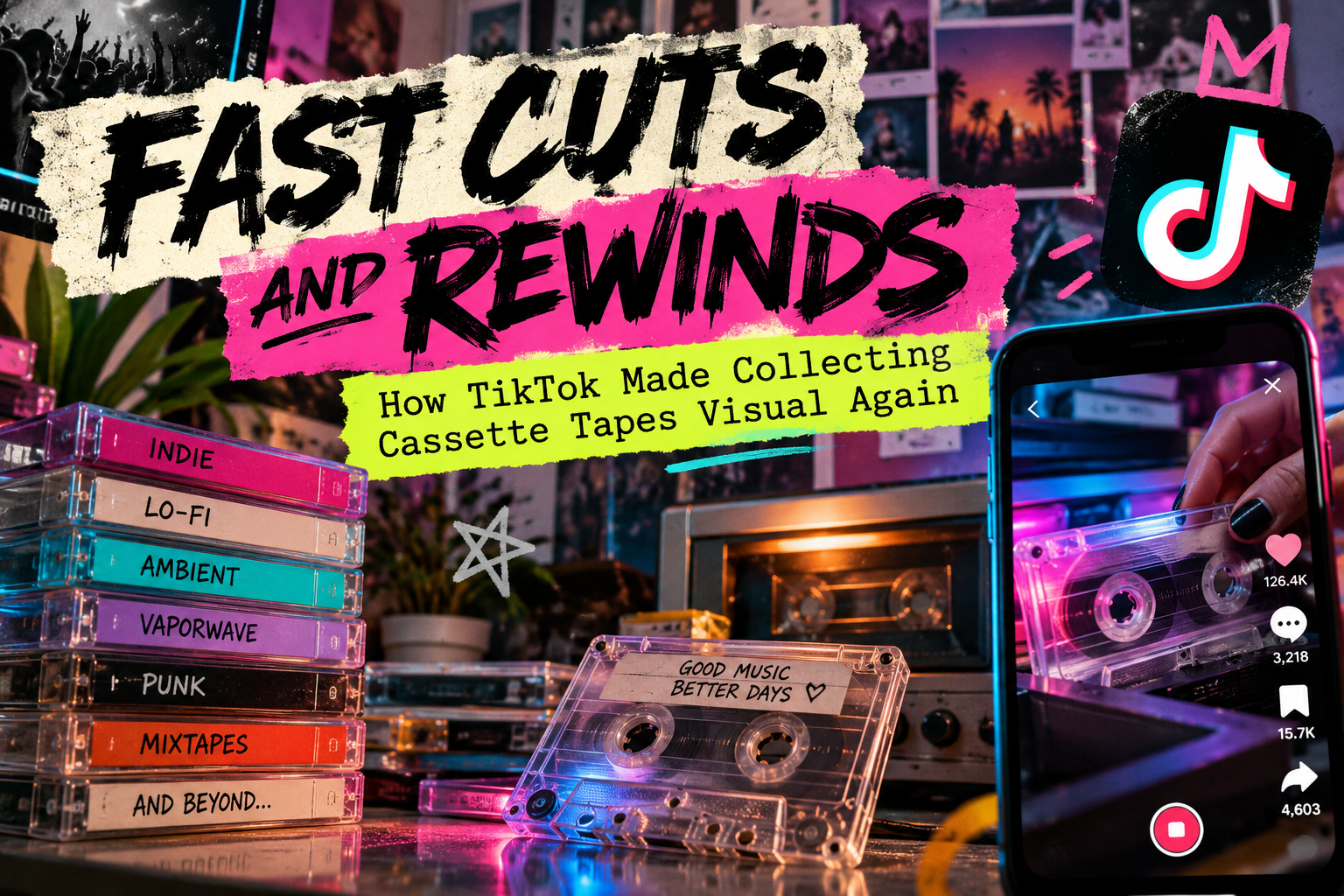
Suddenly, music culture wasn’t only about what something sounded like. It became about how music looked on camera. And cassette tapes — colorful, mechanical, tactile little artifacts — turned out to be perfect for the vertical-video era.
In 2026, the cassette revival isn’t just sonic nostalgia. It’s visual culture. TikTok didn’t merely help bring tapes back. It transformed cassette collecting into performance art.
The Perfect Object for the Infinite Scroll
Vinyl records had already dominated Instagram for years. Beautiful shelves. Expensive turntables. Carefully curated listening corners. But TikTok changed the rules of engagement.
Static aesthetics no longer mattered as much as motion.
Cassette tapes move.
Buttons click. Wheels spin. Doors snap open. Transparent shells expose miniature machinery in motion. Handwritten labels slide into frame like props in a retro sci-fi film. There’s action embedded into the object itself.
On TikTok, where the first two seconds determine whether somebody keeps watching, tapes became visual gold.
A close-up of a cassette dropping into a glowing tape deck.
Fast cuts synced to lo-fi ambient music.
Tiny reels spinning under neon LEDs.
A shaky camcorder filter layered over degraded audio.
It wasn’t long before “cassette tok” emerged as its own aesthetic microculture.
The Death of Passive Music Consumption
Streaming turned music invisible.
That’s the strange paradox sitting underneath modern listening culture. People consume more music than ever before, yet physical interaction with music practically disappeared. Songs became floating files inside apps.
TikTok reversed that dynamic by rewarding visible rituals.
Cassette tapes offered rituals everywhere:
rewinding,
fast-forwarding,
flipping sides,
repairing tangled tape with pencils,
recording homemade compilations.
Those actions translated beautifully into short-form video.
In a digital environment overloaded with frictionless convenience, physical interaction suddenly became entertaining again.
The cassette wasn’t competing with Spotify on convenience. It was competing on experience.
And experience wins on social media.
Mixtapes Became Content Again
One of the biggest surprises of the cassette comeback has been the return of the mixtape as an emotional object.
TikTok creators started filming themselves making tapes for friends, girlfriends, boyfriends, long-distance relationships, road trips, breakups, and late-night study sessions. Entire communities formed around handwritten J-cards and personalized cassette art.
This wasn’t just nostalgia cosplay.
For younger users raised on playlists generated by algorithms, handmade tapes felt radically intimate. Recording a mixtape required time, effort, sequencing, and emotional intent.
It carried weight.
That emotional authenticity became especially powerful during cultural moments defined by digital exhaustion and AI anxiety. Around events like the ongoing debates surrounding AI-generated media during panels at SXSW and experimental art showcases at MUTEK, younger audiences increasingly gravitated toward analog formats that felt undeniably human.
A Spotify link says “I thought of you.”
A mixtape says “I spent hours making this.”
TikTok amplified that distinction.
Cassette Colors Were Built for Algorithms
Modern cassette labels figured out the visual game quickly.
Independent artists started releasing tapes in translucent neon shells, glow-in-the-dark plastics, marble swirls, holographic cases, and cyberpunk-inspired packaging specifically designed to pop on smartphone screens.
Some labels openly admit they now design cassette packaging with TikTok videos in mind first and store shelves second.
And honestly? It worked.
Brightly colored cassettes became collectible visual objects in the same way sneakers, keyboards, film cameras, and gaming setups dominate modern lifestyle content online.
Collectors no longer just showed what music they owned. They staged it cinematically.
Ambient and Vaporwave Scenes Led the Way
Not surprisingly, ambient music communities adapted to this trend faster than almost anyone else.
Ambient artists already understood the importance of mood, texture, atmosphere, and visual identity. Tape culture fit naturally into scenes built around late-night listening, dreamlike visuals, analog decay, and slow media experiences.
Vaporwave artists pushed it even further, turning cassette aesthetics into a fully immersive visual language rooted in CRT glitches, mall nostalgia, VHS textures, and corrupted digital memories.
TikTok didn’t invent these aesthetics.
It industrialized them.
What once lived deep inside niche internet forums suddenly exploded into mainstream visual culture.
The Walkman Became Fashion
Another major shift came when portable cassette players evolved from thrift-store oddities into lifestyle accessories.
Modern tape players with transparent shells, Bluetooth support, rechargeable batteries, and retro-futuristic designs became wildly popular across TikTok fashion spaces. Clips of people walking through cities wearing wired headphones attached to cassette players started appearing alongside streetwear edits and “analog lifestyle” content.
The tape player became part of the outfit.
Just as vinyl records became decor during the 2010s, cassette players became wearable identity markers in the 2020s.
Algorithms Accidentally Rewarded Analog Media
TikTok’s algorithm thrives on visually distinctive content.
And cassette tapes are visually distinctive.
The movement of spinning reels, the tactile interaction, the nostalgia-coded mechanical sounds — all of it created satisfying sensory moments that triggered engagement. Tape videos generated watch time because people subconsciously enjoyed watching physical systems operate.
Ironically, one of the most algorithmically successful formats on modern social media became a piece of obsolete analog technology.
That contradiction is part of the appeal.
Collecting Became Storytelling
Vinyl collecting often revolves around rarity and prestige.
Cassette collecting feels more personal.
TikTok creators began documenting flea-market discoveries, thrift-store finds, inherited family mixtapes, forgotten answering-machine recordings, and obscure underground releases found at tiny DIY shows.
The story surrounding the tape became as important as the music itself.
That storytelling culture transformed cassette collecting from passive ownership into narrative identity-building.
People weren’t just showing collections.
They were building mythology around them.
A Generation Raised on Screens Wanted Texture
This may be the biggest reason of all.
Younger generations grew up inside touchscreens so smooth they erased physical sensation from everyday life. Music became invisible. Photos became temporary. Media became endlessly replaceable.
Cassette tapes offered resistance to that invisibility.
Plastic cases scratched over time.
Tape hiss changed with repeated plays.
Handwritten labels faded.
Mechanical parts wore down.
The object aged alongside the listener.
That physical relationship created emotional attachment in ways streaming never could.
Rewind the Future
TikTok didn’t revive cassette tapes because they sounded better than vinyl or streaming.
It revived them because they looked alive.
In an era dominated by frictionless digital media, tapes reintroduced movement, ritual, texture, imperfection, and human intention back into music culture. They transformed listening into something visible again.
And maybe that’s what this entire cassette resurgence is really about.
Not nostalgia for the past.
But exhaustion with invisible media.
The cassette tape survived because, in the age of endless scrolling, it gave music a body again.
About The Author