By M-Zine Staff
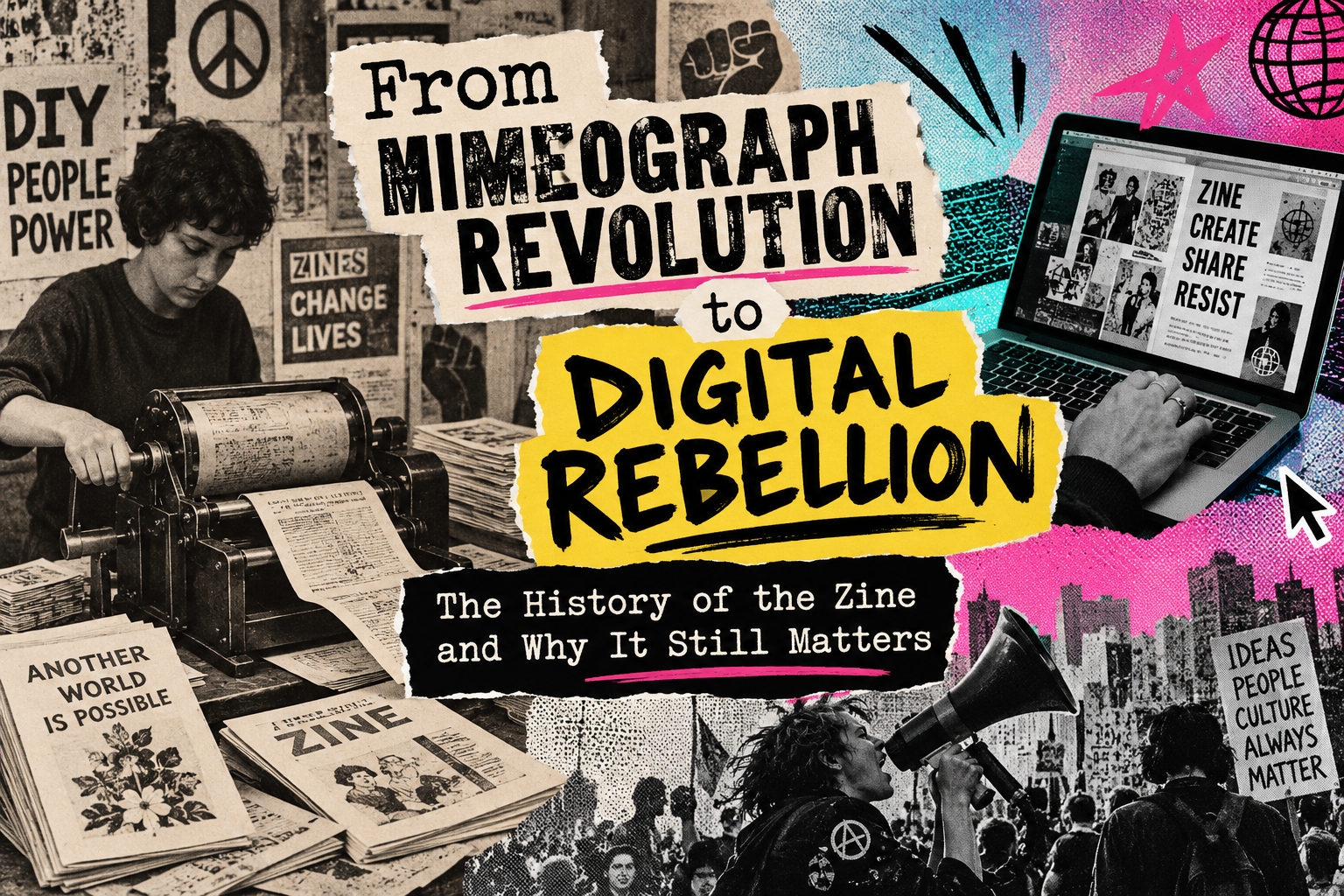
Long before algorithms decided what stories deserved attention, before influencers chased engagement metrics, and before social media transformed everyone into a publisher, there was the humble zine.
Cheap. Imperfect. Personal.
A zine was never meant to compete with major newspapers or glossy magazines. It was something far more dangerous: a direct voice from one person to another.
Today, in an era dominated by corporate platforms and AI-generated content, the zine remains one of the most enduring symbols of independent culture. Its history is the story of ordinary people refusing to wait for permission to be heard.
The Birth of the Underground Press
The roots of zine culture stretch back to the 1930s science-fiction fandoms of America. Passionate readers of pulp magazines began creating homemade publications known as “fanzines,” a combination of “fan” and “magazine.”
Using typewriters, mimeograph machines, and endless dedication, fans shared reviews, stories, artwork, and debates about emerging science-fiction writers. These early publications became social networks decades before the internet existed.
For many readers, receiving a zine in the mail felt revolutionary. Suddenly, they weren’t passive consumers—they were participants.
The famous 1939 science-fiction gathering that evolved into modern fandom culture eventually helped inspire events like the Worldcon, proving that communities could organize themselves without corporate backing.
The Counterculture Finds Its Voice
By the 1960s and 1970s, zines escaped science-fiction circles and became weapons of cultural rebellion.
As anti-war protests erupted across America and movements for civil rights, feminism, and environmental awareness gained momentum, independent publishing exploded.
The spirit of the era was reflected in landmark cultural moments such as the Summer of Love and the Woodstock.
Young activists used zines to bypass traditional media outlets, which often ignored or misunderstood grassroots movements.
The message was simple:
If the mainstream won’t tell our story, we’ll tell it ourselves.
Photocopiers became the printing presses of a new generation.
Punk Rock and the Xerox Revolution
If science-fiction fandom invented the zine, punk rock made it legendary.
The late 1970s punk explosion created an entire ecosystem of DIY publishing. Fans covering bands that commercial magazines ignored began producing their own publications.
Titles like Sniffin’ Glue in the United Kingdom and countless local punk zines across North America documented a rapidly growing underground scene.
As bands like The Ramones, Sex Pistols, and The Clash challenged music industry norms, zines spread the philosophy of DIY culture.
The punk message wasn’t simply “make music.”
It was “create everything yourself.”
Record labels, posters, flyers, radio shows, and magazines could all be built by passionate communities rather than corporations.
The photocopier became the most important instrument in underground culture.
Riot Grrrl and Radical Self-Publishing
During the early 1990s, zines experienced another cultural renaissance through the Riot Grrrl movement.
Women frustrated by sexism in music, media, and society created intensely personal publications discussing identity, politics, sexuality, mental health, and art.
Artists such as Bikini Kill and Bratmobile inspired thousands of creators to document experiences often excluded from mainstream conversations.
These zines weren’t polished.
That was the point.
Handwritten pages, collages, photographs, and photocopied graphics became powerful statements against commercial perfection.
Many historians now view Riot Grrrl zines as precursors to modern blogging, podcasting, and independent online publishing.
The Internet Arrives—But the Zine Survives
When the internet emerged in the 1990s, many predicted the death of zines.
Why spend hours photocopying pages when a website could reach the entire world?
Instead, something unexpected happened.
The spirit of zine culture migrated online.
Blogs became digital zines.
Forums became communities.
Independent websites became self-published magazines.
The tools changed, but the mission remained the same.
People still wanted spaces free from corporate control.
They still wanted authenticity.
They still wanted conversations that didn’t fit neatly into commercial categories.
The Social Media Era
The rise of social media brought unprecedented opportunities for independent creators.
Anyone could publish instantly.
Anyone could build an audience.
But there was a catch.
Algorithms became the new gatekeepers.
Instead of magazine editors deciding what people saw, recommendation systems made those decisions.
The result was a strange paradox.
Publishing became easier than ever, yet true independence became harder to maintain.
Content creators increasingly found themselves optimizing for platforms rather than expressing themselves freely.
Ironically, the conditions that originally gave birth to zines began reappearing.
People once again sought alternatives to centralized systems.
The Modern Zine Renaissance
Today, zines are experiencing another revival.
At independent book fairs, record stores, coffee shops, and cultural festivals worldwide, handmade publications are thriving.
Events such as the Chicago Zine Fest and numerous local zine fairs attract thousands of creators each year.
Modern zines cover everything imaginable:
- Music criticism
- Underground art
- Ambient culture
- Independent radio
- Social issues
- Science fiction
- Local history
- Photography
- Personal storytelling
Many musicians now include zines alongside vinyl records, cassette tapes, and merchandise.
Just as cassette culture has returned as a reaction against disposable streaming, zines offer a physical alternative to endless scrolling.
Why Zines Matter More Than Ever
In 2026, artificial intelligence can generate articles, images, music, and videos in seconds.
Corporate platforms shape much of what billions of people see every day.
Attention has become a commodity.
The zine stands as a reminder that human expression does not need permission, optimization, or mass appeal.
A zine can be messy.
It can be niche.
It can reach only fifty readers.
And it can still matter.
Perhaps that’s why the format refuses to disappear.
Every generation discovers that there is power in creating something with your own hands and sharing it directly with a community.
From science-fiction enthusiasts typing on manual typewriters to punk rockers armed with photocopiers, from Riot Grrrl activists to today’s independent musicians and digital creators, the zine remains a symbol of cultural self-determination.
The technology changes.
The tools evolve.
But the impulse remains the same:
Tell your story.
Print it.
Share it.
And build a community around it.
That simple act has been changing culture for nearly a century—and it shows no signs of stopping.
About The Author